How a Screenwriting Guide Became a Go-To for Novelists
If you hang around writing communities long enough, you’ll hear this title tossed around with a mix of reverence and eye-rolling:
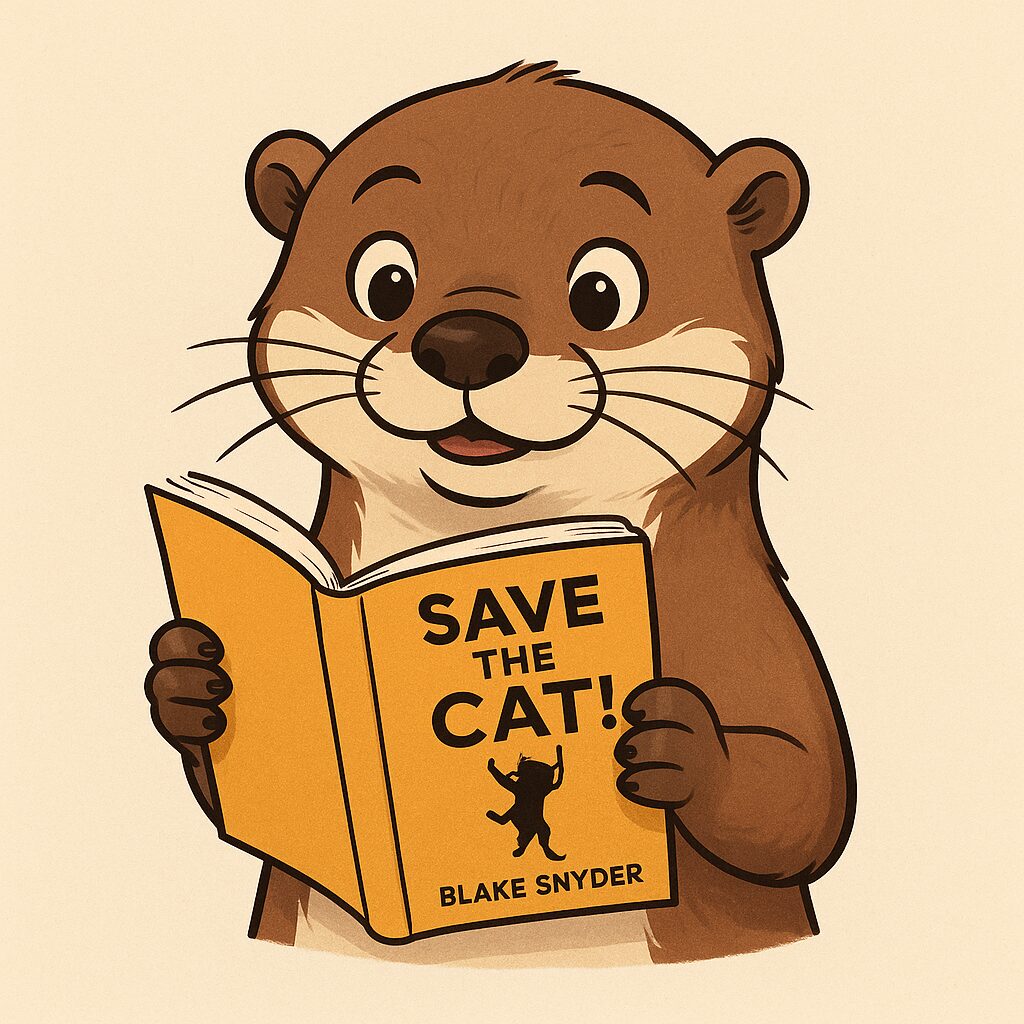
Save the Cat! by Blake Snyder.
Originally written for screenwriters, this slim orange book has found a second life among novelists — especially new writers looking for structure, clarity, and a little tough love. But is it worth reading if you’re writing a novel, not a screenplay? And what exactly does “save the cat” mean?
Let’s dig in.
🐾 What Is “Save the Cat”?
The title comes from Snyder’s theory that your protagonist should do something early on to make the audience like them — save a cat, literally or metaphorically — even if they’re a flawed or morally grey character. That one simple action tells your audience: “This is who you’re rooting for.”
It’s a great tip.
But it’s just the warm-up act.
The heart of the book is a 15-beat story structure that breaks a screenplay (or novel) into clean, digestible chunks. Each beat serves a purpose — and Snyder doesn’t just name them, he labels them with flair.
You don’t get “Inciting Incident” — you get “Catalyst.”
You don’t get “Rising Action” — you get “Fun and Games.”
It’s accessible. Memorable. And, for many writers, a creative lifeline.
🧱 The Beat Sheet at a Glance
Snyder’s 15-beat structure goes like this:
- Opening Image
- Theme Stated
- Set-Up
- Catalyst
- Debate
- Break Into Two
- B Story
- Fun and Games
- Midpoint
- Bad Guys Close In
- All Is Lost
- Dark Night of the Soul
- Break Into Three
- Finale
- Final Image
For new writers who struggle with vague three-act advice, this beat sheet can feel like someone finally switched the lights on.
Each beat is explained with examples from blockbuster films (Snyder was a Hollywood screenwriter, after all), and the tone is conversational — sometimes bordering on cocky, but never dull.
📚 But Does It Work for Novelists?
Yes — with caveats.
The structure translates well to novels, especially in genre fiction (thrillers, romance, fantasy, YA). If you’re writing something plot-driven or commercially minded, this framework can help keep your pacing tight and your stakes escalating.
Where it stumbles a bit is in:
- More literary fiction, where structure is often looser
- Stories driven more by mood or theme than plot
- Writers who hate being told what to do (you know who you are)
Also, because it’s screenwriting-focused, Snyder talks in terms of pages, scenes, and minutes — so you’ll need to do some translation when adapting it to your novel’s word count.
🟢 What It Gets Right
- ✅ Clear, practical structure
- ✅ Memorable terms that stick with you
- ✅ Encourages momentum and purpose in every scene
- ✅ Helps writers actually finish things
- ✅ Highlights emotional beats, not just plot mechanics
🔴 What Might Not Work for Everyone
- ❌ Snyder’s tone can be a bit smug or salesy (he was pitching to studios, after all)
- ❌ Relies heavily on Hollywood examples, which might not resonate with every novelist
- ❌ Some beats feel overly prescriptive if you’re writing more intuitively
🧠 Final Verdict
Rating: ★★★★☆ (4/5)
Blake Snyder’s Save the Cat! remains one of the most widely used structural guides for a reason — it works. It gives writers a practical, story-first approach to outlining, while reminding us that structure isn’t the enemy of creativity — it’s the scaffolding that lets it climb higher.
If you’re a new writer struggling to figure out what happens next in your story, or how to organise the big mess in your head, this book might be exactly what you need.
It’s not high literature — it’s not trying to be. It’s a friendly, fast-talking coach yelling, “You’ve got this! Just break into Act Two already!”
And sometimes, that’s exactly what a writer needs to hear.
You can but this book through my affiliate link here: https://amzn.to/4l7Jf2S or just pop over to Amazon or pretty much anywhere else that sells books.