From “Hmm, I’ve got a thought…” to “I’m writing chapter one”
Every writer has been there.
You’ve got a half-formed idea. Maybe it’s an image, a character, a “what if?” question, or a twist that made you sit up and say, “Oh, that’s good.” But when you try to write it? Nothing. Just fog.
Don’t panic. You don’t need a fully-formed plot or 12-colour index cards. What you do need is a way to take that spark and gently shape it into something that could become a story.
Here’s how to do that — step by step.
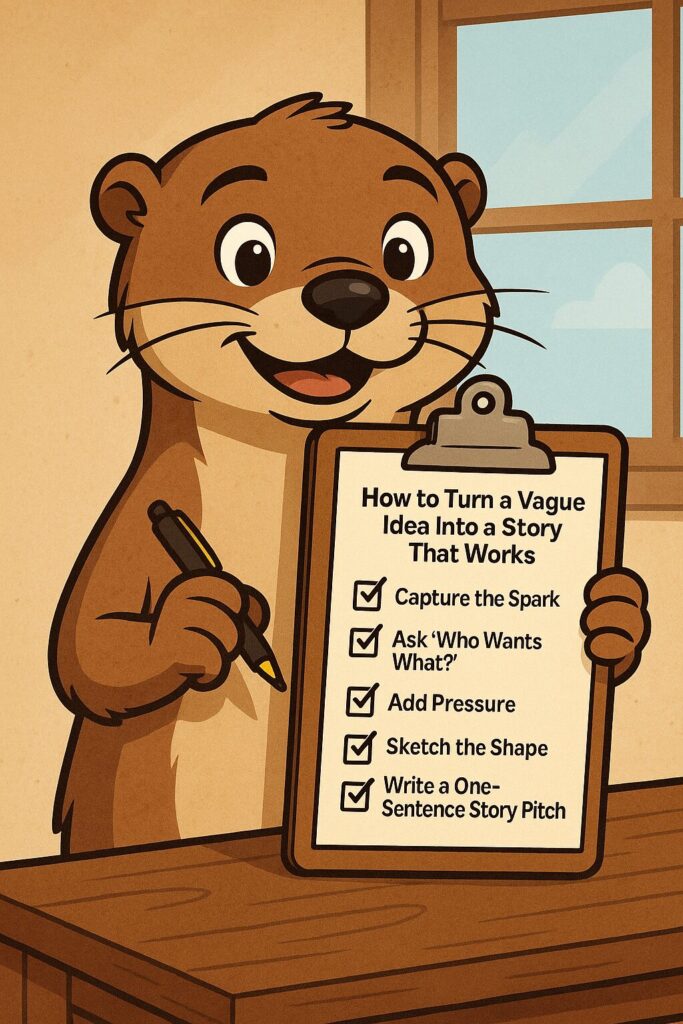
🔥 Step 1: Capture the Spark
First, write down the idea in its rawest form — even if it’s messy.
- “A girl wakes up one morning and no one remembers her.”
- “What if someone discovered their dreams were actual memories from another life?”
- “Two strangers keep bumping into each other… but only one remembers.”
This is your seed. It might not be a story yet — but it’s a start. Don’t overthink it.
🎯 Step 2: Ask “Who Wants What?”
This is the real starting line of most good stories.
Ask yourself:
- Who is this about?
- What do they want?
- What’s stopping them from getting it?
For example:
“It’s about a woman whose fiancé goes missing a week before the wedding. She wants to find him — but uncovers secrets that make her question if she ever really knew him.”
Boom. Now you have a character, a goal, and conflict — the building blocks of story.
💥 Step 3: Add Pressure
A story is just a situation… until it gets worse.
Think about what’s at stake. What happens if your character fails? What forces are working against them?
Raise the tension by asking:
- What could go wrong?
- What are they afraid of?
- What happens if they wait too long?
“She’s being followed. People think she made him disappear. The wedding venue still expects payment. His passport is missing — but someone is using his bank card abroad.”
Now you’ve got pressure. And tension = story.
🛠 Step 4: Sketch the Shape
You don’t need a 40-chapter outline. You just need a shape — a rough beginning, middle, and end.
Try filling in this simple structure:
- Beginning – What pulls your character out of their normal life?
- Middle – What complications or discoveries happen?
- End – What decision or action ends the story?
Even a rough version helps:
“She searches for him → uncovers secrets → decides to walk away, stronger than she was.”
This gives you a destination. You can change it later — but having one makes the writing journey less like wandering through a foggy moor at night with a half-dead torch.
🧭 Step 5: Write a One-Sentence Story Pitch
This is for you — not for agents or back covers.
“A bride-to-be searches for her missing fiancé, only to discover the man she planned to marry may never have existed.”
That sentence reminds you what your story is about when you get lost halfway through Chapter 8.
✍️ Final Thought: Start Before You’re Ready
Your idea doesn’t have to be perfect. You don’t need all the answers. The act of writing is part of figuring it out.
Give yourself permission to write a clumsy first draft. Give your idea the space to grow.
You can always go back and fix it. You can’t fix a story that never got written.
UPDATE::
When I was looking for a suitable quote to accompany this article I stumbled upon this one from Stephen King and it reminded me how great his book , On Writing , really is. It’s an unusual hybrid of autobiography and writing guidance and if you want to be a successful writer you may benefit from the wise words of one of the most popular writers of all time (I will add this to the recommendation section shortly) :
“The scariest moment is always just before you start.”
— *Stephen King, On Writing